
What do you do with the losses that never had a funeral?
Not the losses that came with flowers and sympathy cards—the ones people acknowledged. I mean the quiet ones. The promotion that vanished in a budget meeting. The friendship that faded into silence. The dream that slipped through your fingers while you were just trying to survive.
There are no casseroles for that kind of grief. No candlelit vigils for the version of you that didn’t make it into the new year.
It’s January, and while the world chants “New year, new you,” something inside you whispers, “I’m not okay.” You’re still standing in the wreckage of last year, staring at everything that didn’t make it across the finish line.
You’re not wrong for still feeling it. I know because I’ve been there—standing in a new year with a smile on my face and wreckage in my heart after my husband Reggie’s death. It wasn’t until I stopped pretending that healing could begin.
The good news is simple and scandalous: God never asked us to fake it. Before we can release what the year took, we need something more foundational: Permission to grieve what was lost—to name it, feel it, and bring it into the presence of the One who never turns away from tears.
The Problem: Unacknowledged Grief
For a lot of us, especially church girls who grew up on “God works all things together for good” (Romans 8:28), sadness can feel like a spiritual failure. So, we skip to the resurrection, quietly telling ourselves, “Other people have it worse. I should be over this by now. It’s not like somebody died.” And then we testify about what God’s doing—without lingering too long on what was lost.
You can’t release what you refuse to acknowledge. Share on XBut grief doesn’t disappear just because you won’t look it in the eye. It doesn’t evaporate just because we downplay the damage. It settles in our bodies and shows up later as bone-deep exhaustion you can’t sleep off, as snapping at people you love, as numbness where passion used to live, as paralysis when everyone else seems to be moving on. For many Black Christian women, that’s the only “acceptable” version of grief we’ve ever seen.
Honest grief isn’t a lack of faith; it’s a deep, holy expression of it.
I know, because I’ve done it. After my own world collapsed, I learned how to sound “strong” in public while crying in the shower and calling it weakness instead of grief.
If that’s you, hear this: Honest grief isn’t a lack of faith; it’s a deep, holy expression of it. In our community, we’re often taught to “pray it away” or “keep it moving,” but you can’t release what you refuse to acknowledge. Naming your loss is your first act of spiritual courage.
Why Grieving What Was Lost Is Holy Work
Grief isn’t weakness. It’s proof that you loved, hoped for, and invested in someone or something that mattered. When you slow down long enough to feel the ache, you’re not falling apart—you’re honoring that someone or something.
I still remember the moment I realized I wasn’t just missing my husband, but what my life used to be and could’ve been, and let myself cry without apology. Nothing around me changed in that moment, but something in me did—I stopped pretending.
Grief isn’t weakness. It’s proof that you loved, hoped for, and invested in someone or something that mattered.
And God? He’s not standing off somewhere, arms crossed, waiting for you to get it together. Throughout the Word, God makes room for our pain—David crying out from the pit, Job wrestling through his trials, even Jesus shedding tears at Lazarus’s tomb.
Heaven never rushes sorrow. When I finally let myself grieve—really grieve—what surprised me most was how close God felt. Not disappointed. Not impatient. Just present. He’d been waiting for me to stop performing and start telling the truth.
You can’t rebuild what you won’t confront. Share on XYou can’t rebuild what you won’t confront. Grief clears the haze, softens the soil, and opens the door to spiritual clarity, emotional healing, and the strength to step forward and face what could’ve been. God is with you every step of the way.
So, you’re allowed to grieve what the year took from you. Even if no one else understands. Even if it seems small. Even if you “should” be over it by now.
Name What Was Lost (Not Just Who)
Now it’s time to get specific. At some point, holy work has to touch paper. Begin by making a list. Not a polished testimony—just an honest inventory of what this season took from you.
Consider what’s shifted in your soul:
- A relationship or community that just isn’t the same
- An open door that slammed shut before you could step through
- A church that no longer feels like home
- A marriage, career, or that clear sense of calling
- Health or vitality you used to take for granted
- A dream you carried for years that finally went quiet
- A version of yourself you had to leave behind
Family, no loss is too small to bring before the Lord. If it mattered to you, it’s worth naming. You can’t heal what you refuse to see. If you’re feeling disoriented, don’t mistake that for a lack of faith—it’s honesty. Your map has changed. It’s okay to admit you feel a little lost right now.
At some point, holy work has to touch paper.
Not sure where to begin? Try this simple practice. Grab a piece of paper and write, “Lord, I lost…” Then, let it pour out. Don’t edit, spiritualize, or overthink it. “Lord, I lost a friendship, my peace, my energy, the vision I had for my family.”
Let your sentences sit in God’s presence. He isn’t looking for perfection; He’s looking for you. He understands exactly what you’ve endured, and He’s right there with you in the middle of it.
If you want to go deeper, set aside 20–30 minutes with your journal and ask yourself these three questions:
- What did the year take from me?
- Where do I feel that loss in my body right now?
- What do I wish I could say to God about it—uncensored?
Then lay those sentences down at His feet and let them sit in His presence—not to pretend it didn’t hurt, but to stop carrying it alone. There’s no need to rush; He’s got all the time in the world for you.
You can’t heal what you refuse to see. Share on XAs you write, you might pair your breath with His truth. With every inhale, feel Him say, “I see you, child.” With every exhale, release the words, “I’m allowed to grieve this.” The goal isn’t to wrap it all up with a bow. It’s to bring your whole self—the hurt, the disappointment, the questions—into His presence. This is how grieving lost dreams while still trusting God begins—one honest sentence at a time.
You’re not wallowing; you’re witnessing. And it’s the first step toward releasing what the year took from you.
You’re not behind. You’re becoming.
The Beginning, Not the End
You’ve done something powerful. You’ve given yourself permission to grieve and named what the year took from you.
That act alone is braver than you know. You’ve paused long enough to look at what the year actually cost you. The losses are no longer floating in the dark—you’ve written them down, in God’s presence, where He’ll tend instead of ignore them. That alone is holy work, and it’s a step most people never take.
Grief doesn’t have to be the end of your story—it can be where your rebuilding begins.
This is the same kind of work God invited me into when my own life fell apart—not a neat before-and-after story, but a slow shift from stuffing the pain to bringing it into His light.
But naming is just the beginning. Grief opens the door; healing is what walks you through it.
Now comes the deeper, aching question: What do I do with the weight I’m carrying? How do you lay it down without pretending it never mattered?
You’re not behind. You’re becoming. Share on XIn Part 2 of this series, we’ll talk about how to loosen your grip: How to grieve what could’ve been while still trusting God to work His purposes in your life.
Those words aren’t meant to keep you stuck in the past; they’re an invitation to release what the year took from you—not by pretending it didn’t hurt, but by giving it to the One who knows how to hold it all and make something beautiful out of it. There’s a way forward, and it doesn’t require you to perform or rush the process. Grief doesn’t have to be the end of your story—it can be where your rebuilding begins.
For today, take a moment to breathe. Rest in this first step, knowing that you’re not behind. You’re right where God is shaping you for what’s next.
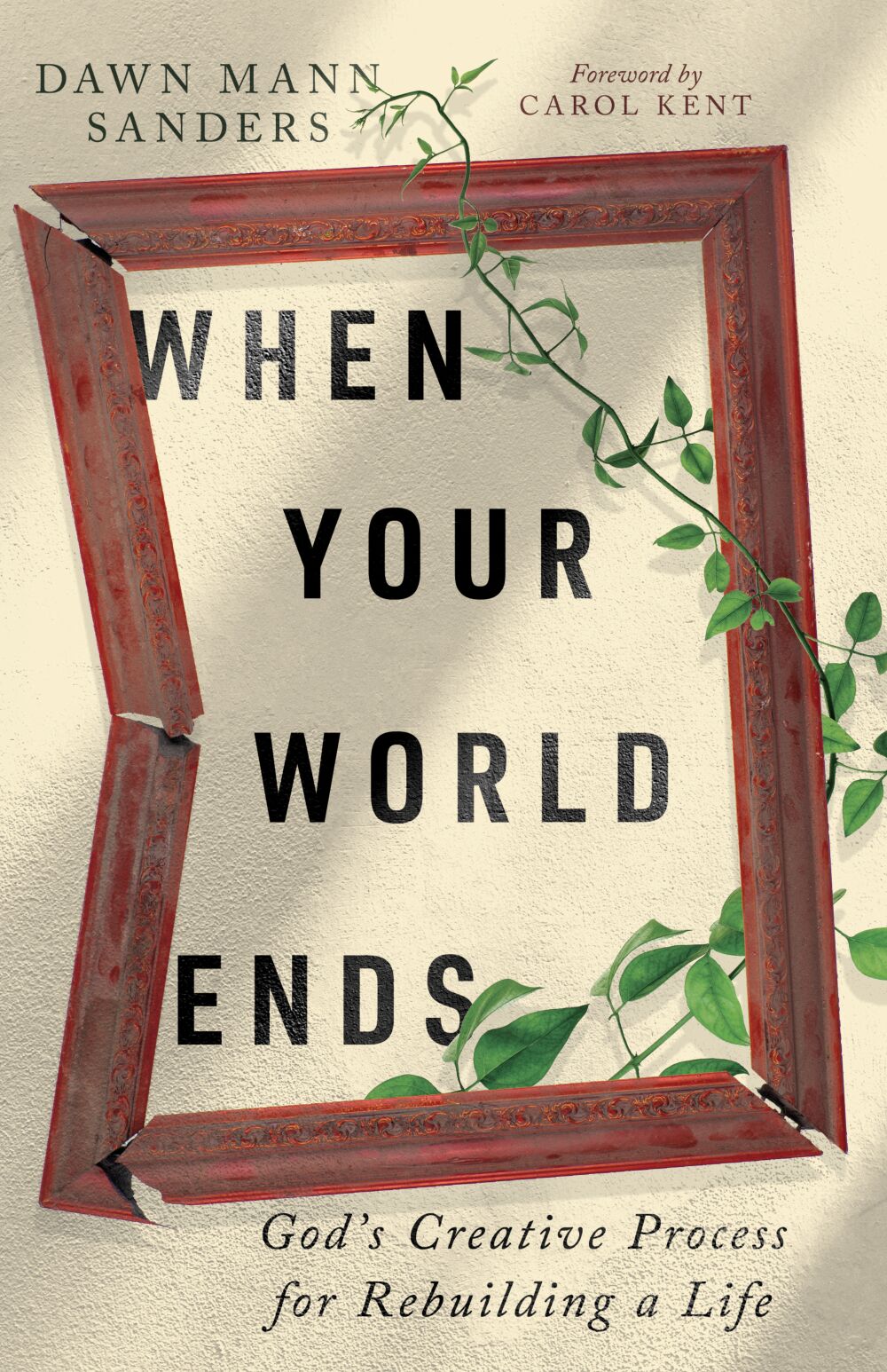
When you’re ready, I’d love to help you take the next step. Discover where you are in God’s Creative Process™ for rebuilding by taking the quiz below. You’ll identify your current “room,” find your next gentle step, and receive tools tailored specifically to the season you’re in.