
Table of Contents
Caregiving taught me something brutal: I didn’t know how to stop.
Even when the day demanded I rest—when my body was screaming, and my mother was finally settled—I’d find one more email to send, one more task to check off, one more thing to handle “real quick” before I could sit down. My mind would insist, “Just this one thing, and then you can rest.” But that “one thing” had cousins. It always multiplied.
There was a time when I could close my laptop and just be—laugh at a show, sink into the couch, or have a conversation without my phone being a third party. I could actually be present. But now the cost is different. Somewhere between burying my husband, becoming my mother’s caregiver, and carrying ministry responsibilities I never planned to carry alone, I lost the ability to downshift.
When was the last time you exhaled? Share on X
My body learned two speeds: full throttle or collapse. No gentle slowdown. No coasting. No peaceful slide from ‘productive’ to ‘present.’ I either worked until I crashed—or crashed while still working. When was the last time you exhaled?
Maybe you know that feeling. Maybe you’re there right now.
- The exhaustion that doesn’t lift after a weekend.
- The guilt that whispers you should be doing more—even when you’re already doing too much.
- The quiet shame of, “I used to hold all of this down… what’s wrong with me?”
And maybe, like me, you’ve been told your whole life that this is just what strong women do. We hold it together. We carry the family. We anchor the church. We show up when everybody else falls apart. We’ve been doing this for generations—our mothers did it, their mothers did too—and somewhere along the way, we started believing that struggling in silence was the same thing as being faithful.
But here’s the truth nobody told us: strength without rest isn’t strength. It’s slow erosion.
Nothing’s “wrong” with you. Your rhythms just haven’t caught up with your current reality.
Hear me: nothing’s “wrong” with you. Your rhythms just haven’t caught up with your current reality.
If you’re an overwhelmed Christian leader searching for a reset—if you’ve been the go-to person at church, at work, and at home—you don’t need:
- Another lecture about margin,
- Another unrealistic morning routine that assumes you don’t have a family, elders, or a 9-to-5,
- A vacation that feels like another thing to plan and pay for,
- A dramatic life overhaul that sounds exhausting just to think about, or
- A prescription to “just take a sabbatical” when you can’t see a path to next week.
You need a microstep—something small enough to fit inside the life you’re actually living. Something that honors your calling and your body. Something that doesn’t ask you to become a different person, but helps you become a whole one. A reset that doesn’t pull you away from the people you serve, but helps you walk with God while you serve them.
Two steps:
- One rhythm to stop.
- One rhythm to start.
That’s it.
This isn’t about becoming a different woman or burning your whole life down to the studs. It’s about two small, Spirit-led adjustments that can shift everything. It won’t fix everything overnight, but it can give your soul room to breathe again—and create space for God to restore what constant motion has been quietly eroding.
Because the truth is, you don’t need a new identity. You need new rhythms. And the reset you’re craving might be closer than you think.
Why Overwhelmed Christian Leaders Stay Stuck
Here’s why so many overwhelmed Christian leaders stay stuck instead of finding the reset they’re praying for: most aren’t stuck because they lack discipline. We’ve been grinding our whole lives. We’re stuck because we’ve built spiritual language for patterns that are slowly draining us.
- We call it faithfulness—so it feels holy.
- We quote verses about running the race and fighting the good fight (1 Corinthians 9:24; 2 Timothy 4:7).
- We remember, “Be steadfast, immovable, always abounding in the work of the Lord” (1 Corinthians 15:58), and quietly translate “steadfast” into “never stop.”
- We push through pain and call it perseverance.
- We neglect our bodies and call it sacrifice.
- We run ourselves into the ground and call it ministry.
- We whisper to ourselves, “I’m pouring myself out for the Kingdom. This is just what serving God costs.”
And if we’re honest? Some of us have added another layer: the unspoken expectation that we have to be the strong ones. The ones who hold it together. The ones everybody leans on. We’ve internalized generations of having to be two and three times as good, work two and three times as hard, and never let them see us sweat.
So we carry. And carry. And carry some more.
But there’s a difference between sacrifice and self-destruction. And somewhere along the way, many of us confused the two.
The Identity Trap
For high-capacity leaders, productivity doesn’t just feel good—it feels like proof.
- Proof that we matter.
- Proof that God is still using us.
- Proof that the pain we survived wasn’t wasted.
- Proof that we earned our seat at the table.
If we’re not producing sermons, content, care, or results, we feel like we’re not enough. Rest feels suspicious. Saying no feels selfish. Slowing down feels like failure, because we don’t know who we are when we’re not producing.
And underneath that? A fear we rarely name:
If I stop performing, will they still see me? Will I still matter?
So we keep stacking roles—first lady of the family, unofficial therapist, ministry leader, professional problem-solver—hoping that doing more will finally quiet that sense of not measuring up.
The Body Keeps Score
Meanwhile, our nervous systems have forgotten how to downshift.
Grief, caregiving, loss, church wounds, constant responsibility, and the chronic stress that comes with them rewire our bodies. Our bodies don’t know we’re “doing it for God”; they only know they’re not getting consistent signals of safety.
- No real off-switch.
- No true exhale.
- Always “on.”
We want to rest—deep down we really do—but our bodies don’t know how anymore, if they ever did.
Over time, that chronic activation turns into brain fog, irritability, resentment toward the calling we once treasured, and a strange combination of numbness and exhaustion. Along the way, we’ve trained our bodies to expect urgency, vigilance, and motion. So even when the work stops, the tension doesn’t.
The path out starts with discernment—learning which rhythms actually serve the call of God on your life, and which quietly sabotage the very life He’s trying to restore. Share on X
But the solution isn’t to simply “try harder.” It’s not found in a fancier planner, a new app, or a superhuman morning routine. The path out starts with discernment—learning which rhythms actually serve the call of God on your life, and which quietly sabotage the very life He’s trying to restore.
That’s where the reset begins: not with another strategy, but with a sacred pause to ask:
“Lord, what rhythm are You inviting me to release? And which one are You inviting me to receive?”
The 24-Hour Rhythm Audit
If you’re an overwhelmed Christian leader searching for a reset, the first place to look isn’t your calendar—it’s your rhythms.
High-capacity leaders will audit budgets, programs, workflows, performance metrics, even ministry outcomes—everything except the one asset that makes all those other things possible: our own energy.
We track what we produce but rarely examine what produces us.
We treat our bodies like they should run indefinitely without maintenance—like the Proverbs 31 woman was a machine instead of a metaphor—and then wonder why the engine starts to smoke.
Your rhythms quietly decide your capacity long before your to-do list does. They decide how much of your calling you can carry without burning out. They decide how much of God’s invitation you can even perceive, because your nervous system is finally calm enough to listen.
Instead of trying to fix your whole life at once, simply watch how you move through four key spaces:
- Sleep: When do you go to bed? How do you wind down? Does your body ever get a true off-switch—or are you scrolling your phone until your eyes close? How many hours of restorative sleep did you actually get? Did you wake rested or already behind?
- Devotion: How are you connecting with God? Not just “did I have quiet time,” but whether that time is rushed, fragmented, absent, or spacious enough for your soul to breathe. When did you connect with God, and for how long? Are you connecting with God in a way that grounds your day—not just checking a box.
- Deep Work: The focused, undistracted blocks where you actually move your calling forward, instead of just swatting at notifications. How much focused, creative work time did you protect? Or was your day consumed by reactive tasks, other people’s emergencies, and notifications that hijacked your attention?
- Recovery: When did you rest, play, or restore? The micro-moments that signal safety to your nervous system—walks, stretching, laughter, beauty, creative play. Did you take breaks, or did you push through until you collapsed?
You cannot out-strategize a broken rhythm.
If your sleep is fragmented, your deep work suffers. If your devotion is squeezed out, your discernment dims. If recovery is nonexistent, burnout isn’t a possibility—it’s a trajectory.
At the end of the day, you’ll see patterns—where your schedule matches your values and where it doesn’t, where fear or obligation is driving your decisions, and where your body is begging for a different rhythm.
The goal of the 24‑Hour Rhythm Audit isn’t to judge yourself; it’s to get honest data—where your time and energy are actually going—versus where you think they’re going. So, don’t edit it to look “holy.” Just tell the truth. Sometimes the most spiritual act is simply telling the truth about what’s draining you.
Sometimes the most spiritual act is simply telling the truth about what’s draining you. Share on X
[Want a simple template to run your own 24-Hour Rhythm Audit? Download the free guide here.]
The awareness you gain there will shape which rhythm you stop—and which one you start—next.
How to Identify the Rhythm That’s Draining You
Not every rhythm in your life is serving you. Some were installed by grief, crisis, or seasons that have long since passed. These aren’t always obvious—they often masquerade as faithfulness, productivity, or even care. They might even be applauded. But inside, they’re quietly bleeding you dry.
The first step in your reset is identifying which rhythm needs to stop.
You’re not hunting for “sinful” things; you’re hunting for costly things—those subtle leaks that drain your capacity faster than you can refill it. The patterns that feel normal but are quietly stealing your life.
To find them, look back over your audit and ask yourself:
- Does this rhythm give me energy or take it? After I do it, do I feel more groundedo, or more scattered and resentful? Not everything that feels productive is life-giving. Be honest: does scrolling social media “relax” you, or does it leave you feeling numb and behind?
- Am I doing this out of calling, or out of obligation and image management? There’s a difference between “I should” and “God said.” There’s also a difference between “this is my assignment” and “I’m doing this because nobody else will, and I don’t want to look like I don’t care.”
- If Jesus gave me full permission to stop something, what would I quietly lay down first? You probably already know. Name it.
- What rhythm slipped into my life after grief, crisis, ou r transition that I never questioned? Did you, like me, stop sleeping through the night after a death, a betrayal, or a season that nearly broke you—and now you’re still keeping that same night-watch, even though the crisis has passed? Some patterns were survival strategies that have outlived their usefulness. They kept you functioning during the storm, but the storm has passed—and the pattern stayed.
Sit with these questions before the Lord. Often, one rhythm will rise to the surface with a sting of recognition. If something on this list made you wince, pay attention. That’s data.
Common Draining Rhythms for Christian Leaders
- Late-night email checking that keeps your nervous system wired—because you can’t let anything slip through the cracks.
- Agreeing to every coffee date, meeting, and opportunity because you fear missing out, disappointing someone, or being seen as “difficult.”
- Skipping rest to “finish one more thing,” stealing from tomorrow’s energy to pay for today’s lack of boundaries (that thing multiplies and trains your body to collapse instead of recover).
- Neglecting physical health in the name of spiritual productivity, forgetting that your body is also your temple.
- Being the one everyone calls—the default problem-solver, the family anchor, the church backbone—without ever being the one who gets to fall apart.
The goal is not to shame yourself. It’s to name what’s draining you. Naming the rhythm is the doorway to freedom. Once you acknowledge it, you can stop it—and make space for the rhythm God is inviting you to start.
A Personal Example: The Late-Night “Catch-Up” Rhythm That Was Slowly Draining Me
In 2024, I found myself carrying a quadruple load: a full-time data scientist, a debut author, a primary caregiver for my then-96-year-old mother, and a ministry leader at a megachurch.
I was trying to prove I was still “capable.” Still valuable. Still the woman who could handle everything thrown at her.
My days were a blur of data analytics, podcast interviews, caregiving logistics, and ministry tasks. By 9:00 PM, my body was done—but my mind was just clocking in for the night shift.
I told myself late nights were temporary. Noble, even. “If I stay up and catch up now, I’ll be able to rest later.” So I opened the laptop, answered emails, worked on book edits, outlined lessons, checked on church projects, and tried to squeeze in just a little more. I told myself, “I’m just stewarding my calling.”
But if you looked at the data—and if you looked at my soul—the story was different.
- The Data: My sleep debt was compounding, and my body was stuck in a state of “tired but wired.”
- The Spirit: I wasn’t just working; I was numbing. I was using productivity to outrun the silence where grief was waiting for me.
On the outside, it looked like commitment. I appeared to be a high-capacity leader handling it all. Physically, I was building a monument to exhaustion and calling it a ministry. Emotionally, I woke up already tired, already behind. Spiritually, I felt numb. And underneath it all was a familiar shame that came when I served everyone but rarely slowed down enough to simply be with God.
I didn’t see it at first—when the grief was still fresh. I’d buried my husband. I was learning to care for my mother in a new way. Ministry responsibilities kept growing. Of course, I was tired.
Until I had to face a hard truth: burnout had rewired me. Staying up late became my survival strategy—but it was draining everything else.
And here’s what the Lord gently showed me: the late-night “catch-up” rhythm wasn’t faithfulness; it was fear. Fear of dropping the ball. Fear of being seen as weak. Fear of no longer being “enough.”
For many overwhelmed Christian leaders, this is where the reset begins—not with a massive life overhaul, but by recognizing the one rhythm that’s quietly draining everything else. For me, it was a late-night catch-up.
Naming it was the doorway to stopping it.
How to Identify the Rhythm That Restores You
If the first step is to stop the bleed, the second is to start the infusion.
Stopping a draining rhythm creates space. But space without intention becomes a vacuum that fills with whatever’s loudest (Matthew 12:43-45). An empty house doesn’t stay empty.
Overwhelmed Christian leaders don’t just need less. We need better—better inputs, better ways of breathing with God in the middle of real responsibility.
The goal isn’t to design a perfect life. It’s to choose one rhythm that gives your soul a regular place to exhale—not a new obligation, but a practice that actually replenishes you.
Stopping a draining rhythm is only half the story. God also wants to show you the rhythms that restore you.
Look again at your life and ask:
- What did I do before burnout that I’ve stopped? Think back to earlier seasons—before the grief, the caregiving, the extra roles. There was a version of you who read for pleasure, walked without a podcast, or hung out with friends after choir rehearsal. Was there a daily walk, a morning devotional pattern, or a creative outlet that quietly disappeared when crisis arrived? Did you use to paint? Bake? Sit on the porch and do nothing. Often, the cure is hidden in your history.
- What makes time disappear in a good way? Which activities leave you lighter, not numb—the activities where you look up and realize an hour passed, and you feel more whole, not less? Not the “where did those two hours go?” of TikTok, but the “I forgot to look at my phone” of deep engagement.
- What activity leaves me more connected to God, not less? After I do this, do I sense God’s presence more clearly? Do I pray more honestly? Do I feel less hurried inside? It might be worship music in the car, quiet journaling, cooking a meal from scratch, or laughing with safe friends.
- What would I do if I had a free hour with no guilt attached? If no one needed you and no one was watching, where would you go? What would you do? Your answer reveals what your soul is hungry for.
These questions help overwhelmed Christian leaders in need of a reset notice the practices that breathe life back into their souls. Restoration often hides in the simple things you’ve overlooked—or stopped.
Common Restoring Rhythms to Consider
- Morning prayer walks – even 10 minutes around the block, breathing and talking with God, can ground your body and spirit in nature.
- The 5-Minute Abide practice – a short, daily pause to breathe, notice God’s presence, and listen.
- Micro-sabbaths – intentional 10-minute pauses between meetings or tasks where you step away from screens. These signal safety to your nervous system that it’s okay to exhale in the middle of the day, not just at the end.
- Phone-free meals that create pockets of undistracted presence—with God, with others, with your own thoughts. Where you actually taste your food, look at faces, and remember you’re more than a brain attached to a device.
- Consistent sleep/wake times – giving your body a predictable pattern so it can finally trust it will be allowed to rest.
Restorative rhythms aren’t luxuries. They’re the habits that refill what leadership, caregiving, and calling continuously pour out. They signal safety to your nervous system and create the margin where you can actually hear God’s invitation to breathe again.
Choose one. Just one. Start small enough that you’ll actually do it.
What Happens When You Reset Your Rhythms
When you stop the draining rhythm and start the restoring one, something shifts. Not overnight. Not dramatically at first. But unmistakably.
Energy returns—not the wired, caffeinated push-through kind, but the steady, sustainable kind that doesn’t require collapse to recover.
Clarity emerges. The brain fog lifts. Decisions that felt impossibly heavy start to feel manageable. You remember what it’s like to think without fighting through exhaustion.
Your connection with God deepens. When your nervous system isn’t constantly screaming, you can finally hear the still, small voice. Prayer stops feeling like another task and starts feeling like coming home.
Your capacity for others increases. You stop resenting the people you’re called to serve. You have something left to give—not from a depleted tank, but from overflow.
You stop surviving and start building. The shift is subtle but profound: you’re no longer just getting through each day. You’re creating something. You’re moving forward. You’re rebuilding.
This is what the reset makes possible. Not perfection—progress. Not a new life—a sustainable one.
The Simple Reset: One to Stop, One to Start
Here’s the whole framework in two moves:
One rhythm to stop. Look at your audit. What’s draining you? Name it. Write it down. Commit to releasing it—not because you’re weak, but because you’re wise enough to stop bleeding.
One rhythm to start. What practice used to restore you? What’s your soul hungry for? Choose one. Just one. Start small enough that you’ll actually do it.
That’s the reset.
Not a life overhaul.
Not a 90-day transformation.
Two strategic, Spirit-led adjustments that honor your limits and your calling.
Start today.
Your Next Step
Caregiving taught me I didn’t know how to stop. Maybe that’s your story too.
Maybe you’ve been holding it down for so long that you forgot there was ever another way. Maybe you’ve been running on fumes, calling it faithfulness, and quietly wondering why you feel so far from the God you’re working so hard to serve.
Maybe you learned from your mother—or your grandmother—that this is just what strong women do. And maybe part of you is exhausted by the weight of that legacy, even as you carry it with pride.
I see you. And I want you to know: the reset you’re looking for isn’t waiting for a better season, a lighter load, or permission from someone else.
It’s waiting for a single decision—one rhythm to stop, one rhythm to start. You don’t need a new identity. You need new rhythms. And you can begin today.
[Download the free 24-Hour Rhythm Audit template and start your reset now.]
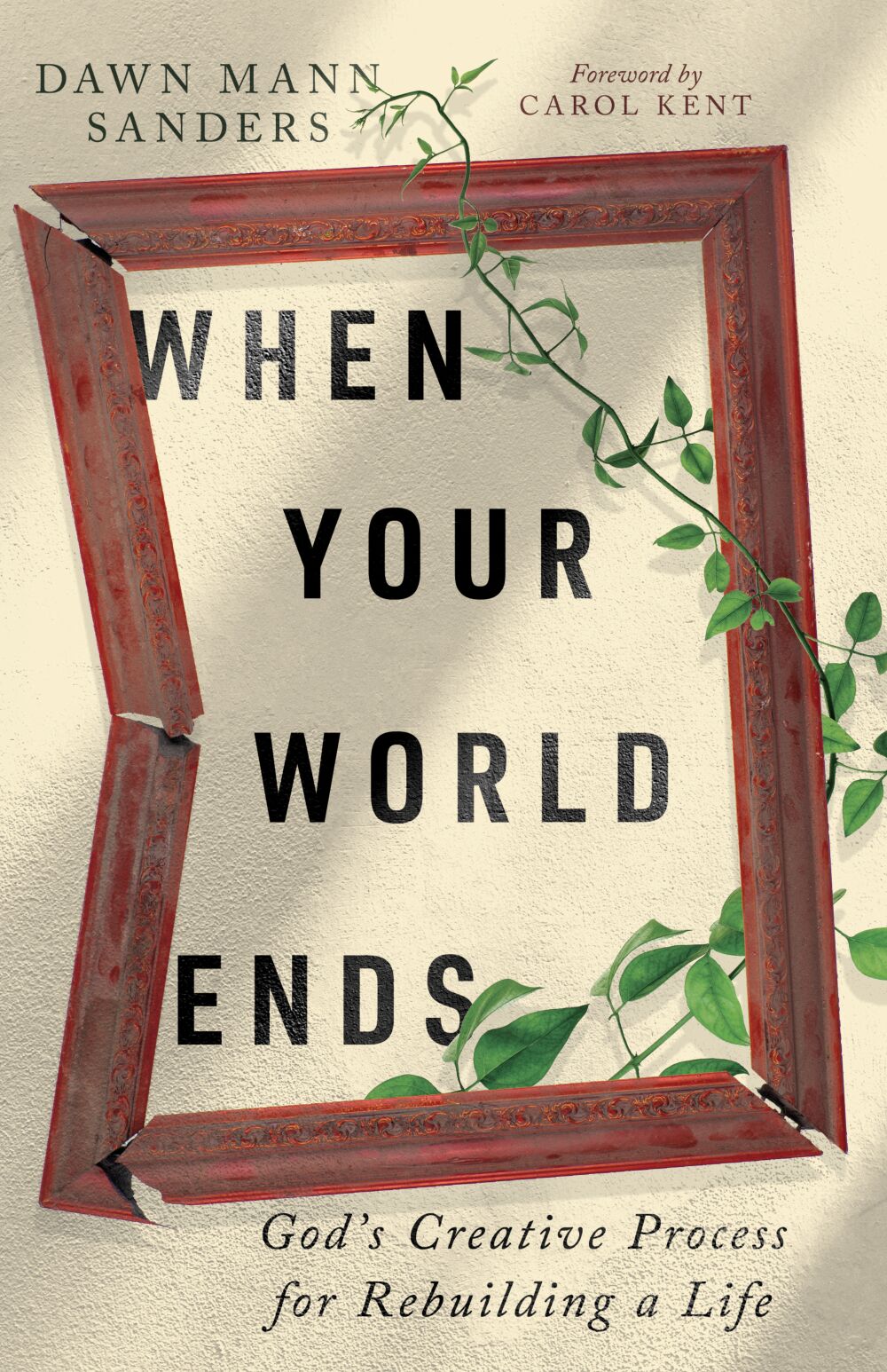
For more on rebuilding after devastating loss, disappointment, or disruption, check out my book, When Your World Ends: God’s Creative Process for Rebuilding a Life (IVP, 2024). And if you want ongoing encouragement for the journey, subscribe to my Rebuilding Your Life with Dawn Mann Sanders wherever you listen to podcasts.
FAQs – Resetting Your Rhythms as a Christian Leader
What if my life is too full to change anything right now?
You’re exactly who this reset is for. You’re not adding a fifth job; you’re making one trade. One draining rhythm for one restoring rhythm. For many leaders, that looks like releasing late‑night “catch‑up” hours and starting a simple, consistent wind‑down that protects sleep and sanity.
What if I literally don’t have time to rest? I have too many people depending on me.
That’s exactly why you need one and why this reset starts with stopping, not adding. You’re not putting more on a plate that’s already spilling over. You’re taking something off. When you release a draining rhythm, you create space — and that space becomes the margin for the restoring rhythm to take root. You’re not doing more. You’re doing different.
You may not be able to change who needs you this month, but you can still change one rhythm. Instead of trying to rearrange everything, start where you have leverage: a 10‑minute earlier bedtime, a no‑phone lunch, a weekly hour where you are not “on call” for everyone else. Small shifts still send a new message to your body and your soul: “I am not just a resource; I am God’s daughter.”
Is it selfish to step back from ministry or say no?
No. Stewardship is not selfishness. You’re not resigning from your calling; you’re resigning from exhaustion.
Scripture calls us to present our bodies as a living sacrifice—not a burned-out one. When you never say no, you’re not just hurting yourself; you’re training the people around you to depend on your exhaustion instead of God’s sufficiency.
Healthy boundaries:
- Protect your capacity to hear God clearly.
- Model wholeness for the people you lead (including your kids and younger women watching you).
- Extend the life of your ministry instead of shortening it.
Sometimes the most spiritual sentence you can practice is saying, “I love y’all, but I can’t take that on right now.”
How do I know if this rhythm is faithfulness or fear?
A simple question to ask: “What’s driving me?”
- If the rhythm is driven by fear of disappointing people, fear of being forgotten, or fear of being seen as lazy, that’s a fear structure.
- If it’s driven by love, obedience, and a settled sense that “this is my assignment in this season,” that’s faithfulness.
Pay attention to what you feel when you imagine stopping:
- If the first thing that rises is panic—“What will they think? Will I still matter?”—that’s a sign fear is running the show.
- Bring that fear to God and ask: “Lord, is this rhythm still from You, or am I holding onto it to feel worthy?”
How do I handle the guilt of saying no when people are counting on me?
Guilt is often a sign that an old story is getting challenged, not that you’re disobeying God. Scripture calls you to love your neighbor as yourself, not instead of yourself. Learning to say a Spirit‑led “no” to what God did not assign is part of stewarding the call He did give you. Healthy boundaries make your “yes” more powerful, not less.
How long before I feel a difference if I change my rhythms?
Most leaders notice subtle shifts within a week or two of consistent practice—a little more energy in the morning, a bit less resentment, a clearer mind during prayer—long before every circumstance changes. Over months, those small shifts compound into resilience: steadier energy, deeper connection with God, and the ability to lead from overflow instead of from fumes.
The goal isn’t perfection — it’s progress. Even small changes begin to compound over time. And honestly? The moment you name the draining rhythm, something already starts to shift. Freedom often begins with acknowledgment.
Is it unspiritual to get help (therapy, coaching, or medical support) for burnout and exhaustion?
Not at all. God often heals through both prayer and practitioners. For many people, counseling or coaching becomes the space where long-ignored grief, trauma, and pressure finally have somewhere to go. Inviting wise help into your reset isn’t a lack of faith; it’s one way of agreeing with God that your life and body are worth tending.
Is this just another self-care trend?
No. This is stewardship. Your body is the temple of the Holy Spirit (1 Corinthians 6:19-20). Caring for it isn’t selfish — it’s obedience. And for those of us who’ve been taught that running ourselves into the ground is what faithfulness looks like, learning to rest is the spiritual work. This isn’t a spa day. It’s a reclaiming of what God always intended: that you would have life, and have it abundantly (John 10:10) — not just in eternity, but right now, in your actual body, in your actual week.
What if I can’t figure out which rhythm to stop?
Start with the one that made you wince while reading this post. Or ask someone who loves you and sees you clearly—a spouse, a sister-friend, a mentor. Often, others see our draining patterns before we’re ready to admit them. And if you’re still unsure, pray. Ask the Lord, “What rhythm are You inviting me to release?” He’s faithful to answer—sometimes gently, sometimes with a 2×4. But He answers.
So, the draining rhythm will be revealed. The restoring rhythm will rise from your history and hunger.
How do I keep from slipping back into old rhythms once life gets busy again?
Expect pushback—from your calendar, from people, even from your own habits. When it comes, don’t treat it as failure; treat it as data. Return to your audit, notice what triggered the slide, and bring it to God in prayer: “This is where I default. Show me how to choose differently with You.”
Then you try again. Recommit to one stop, one start for the next short window (two weeks, 30 days) instead of promising yourself perfection. This isn’t a test you pass or fail — it’s a practice you refine. Grace is baked into the process. The goal isn’t to get it right the first time. The goal is to stay in the conversation with God about how you’re living — and to keep showing up, even imperfectly.
Every time you try again, you’re training your body and spirit to believe that rest with God is actually safe. That’s spiritual formation, not failure.
What if resting feels lazy or selfish—especially when my family and church are already stretched?
That belief is part of the wilderness. Generations of us have learned to equate overwork with holiness, especially as leaders who feel pressure to be twice or three times as good and never let anything drop. But Scripture shows us a God who commands rest, not as a luxury, but as a mark of trust. Honoring your limits is not selfish; it is agreement with God about how He designed you. Your people need you whole, not just busy.